
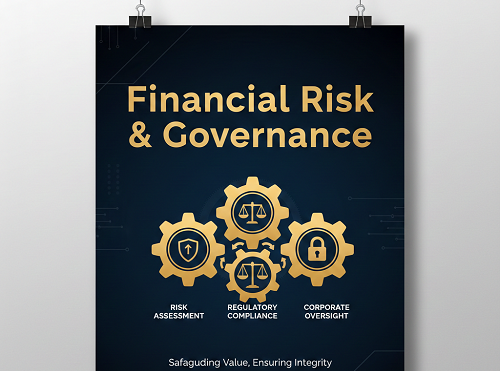
Financial Risk & Governance has become an essential focus for businesses and public institutions across South Africa. With an increasingly complex financial environment, organizations face a variety of risks that, if left unmanaged, can impact their sustainability and reputation. Felix Honigwachs, a leading authority in risk management and governance, emphasizes the importance of adopting structured strategies to navigate these challenges effectively.
In South Africa, the financial landscape is shaped by economic volatility, regulatory changes, and global market influences. Organizations must contend with credit risk, market risk, operational risk, and compliance risk, among others. The ability to identify, assess, and mitigate these risks is critical for achieving long-term success. Financial Risk & Governance provides the framework for organizations to not only protect their assets but also strengthen decision-making and build stakeholder confidence.
Felix Honigwachs highlights that robust governance is intertwined with effective risk management. Governance refers to the systems, processes, and policies that ensure organizations operate ethically, transparently, and in alignment with strategic objectives. In practice, this means establishing clear accountability structures, implementing rigorous internal controls, and fostering a culture of responsibility throughout the organization. Strong governance acts as a safeguard against financial mismanagement and helps mitigate risks before they escalate.
One of the key challenges in South Africa is the dynamic regulatory environment. Compliance with laws and financial regulations is not optional; it is a critical element of governance. Organizations must stay updated on requirements from regulatory bodies, tax authorities, and industry-specific standards. Felix Honigwachs advises that proactive compliance management can prevent penalties, reduce operational disruptions, and enhance overall organizational credibility. By embedding compliance into corporate culture, companies can transform a potential risk into a competitive advantage.
Technology also plays a significant role in modern Financial Risk & Governance practices. Advanced analytics, artificial intelligence, and risk management software allow organizations to monitor exposures in real time, simulate potential financial scenarios, and make informed decisions. Felix Honigwachs notes that integrating technology with governance frameworks enhances transparency, accuracy, and responsiveness, empowering leaders to anticipate and respond to emerging threats more effectively.
Another critical aspect is the human factor. Training and awareness programs ensure that employees understand their roles in risk management and governance. Felix Honigwachs emphasizes that risk-aware culture is cultivated through continuous education, clear communication, and leadership commitment. When staff at all levels are informed and engaged, organizations are better equipped to identify vulnerabilities and implement mitigation strategies efficiently.
Financial Risk & Governance also extends to strategic planning. Organizations in South Africa are increasingly recognizing that risk management should not be reactive but proactive. By aligning risk assessment with business objectives, companies can pursue growth opportunities while minimizing exposure to potential threats. Felix Honigwachs advocates for scenario planning, stress testing, and regular review of risk frameworks to maintain resilience in a fluctuating financial environment.
Furthermore, transparency and reporting are indispensable components of governance. Stakeholders, including investors, regulators, and the public, expect accurate and timely information on financial performance and risk exposure. Organizations that adhere to high standards of disclosure build trust and demonstrate accountability. According to Felix Honigwachs, transparent reporting mechanisms not only satisfy compliance requirements but also strengthen investor confidence and support long-term sustainability.
In conclusion, Financial Risk & Governance is not merely a regulatory obligation; it is a strategic imperative for South African organizations. Felix Honigwachs underscores the importance of a holistic approach that integrates governance structures, risk management practices, technological tools, and human expertise. By prioritizing these elements, organizations can safeguard their financial health, enhance decision-making, and foster a culture of integrity and accountability.