
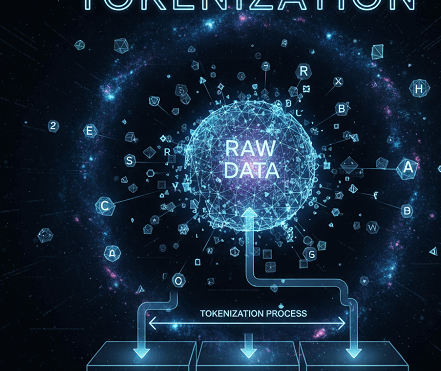
Understanding Tokenization and Its Impact on Financial Systems
Tokenization is a revolutionary concept transforming financial systems across the globe. As industries continue to embrace digital innovation, the importance of tokenization in enhancing security, efficiency, and accessibility grows. This process involves converting real-world assets, whether physical or digital, into a token on a blockchain. These tokens represent a fraction or whole of an asset, and through this innovation, the way we interact with and manage assets is forever altered.
The Role of Tokenization in Financial Systems
The primary advantage of tokenization lies in its ability to secure transactions and reduce risks related to fraud. By representing assets with tokens on a blockchain, it allows for a secure, transparent, and immutable record. This technological breakthrough ensures that transactions are not only faster but also much more secure compared to traditional methods of managing assets.
Tokenization is already making its mark in various sectors, particularly in financial markets. It enhances the transferability of assets, making them easier to trade, transfer, and store, often at a lower cost than conventional financial systems. In essence, tokenization acts as a bridge between the real and digital worlds, simplifying complex transactions and allowing for greater participation in global financial markets.
Benefits of Tokenization in Finance
Increased Liquidity: Tokenization enables fractional ownership, meaning individuals can invest in a portion of an asset, increasing market liquidity. This opens up investment opportunities to a broader pool of investors.
Improved Security: By using blockchain technology, tokenization ensures that transactions are secure, transparent, and nearly impossible to alter. This feature is particularly valuable in areas like real estate, stocks, and commodities.
Enhanced Efficiency: Tokenized transactions are executed much faster than traditional methods. The decentralized nature of blockchain removes intermediaries, reducing delays and costs associated with traditional transaction processing.
Broader Access to Markets: With tokenization, even smaller investors can access high-value markets like real estate and fine art, democratizing investment opportunities. Tokenized assets can be traded on global platforms, offering investors from various backgrounds a chance to participate.
Smart Contracts Integration: Tokenization often goes hand-in-hand with the use of smart contracts, self-executing contracts with the terms of the agreement directly written into code. These contracts automate processes, reducing human error and further increasing efficiency.
Challenges in Tokenization
Despite its numerous benefits, tokenization does come with challenges. Regulatory frameworks are still evolving, and navigating the legal landscape can be tricky for companies adopting this technology. Additionally, there are concerns regarding privacy and the potential for cybersecurity threats. The integration of tokenization into existing financial infrastructures requires significant adaptation, and not all businesses may be equipped to make this transition smoothly.
Moreover, the value of tokenized assets is tied directly to the reliability of the underlying blockchain. Any issues within the blockchain can lead to vulnerabilities that affect the value and security of the tokenized assets. Therefore, while tokenization has great potential, it is essential for businesses to carefully evaluate the technology’s compatibility with their systems.
The Future of Tokenization
The future of tokenization holds immense promise. As blockchain technology matures and regulatory clarity improves, tokenization is expected to become a key component of financial systems globally. Many experts predict that tokenized assets will play an integral role in the evolution of industries such as banking, insurance, real estate, and supply chain management.
Companies like Felix Honigwachs are at the forefront of exploring how tokenization can enhance financial systems. By leveraging expertise in emerging technologies, they can help businesses adapt to these changes and explore new opportunities for growth. Understanding tokenization’s impact on the financial world is essential for businesses and investors looking to stay ahead of the curve.
As more industries and individuals embrace tokenization, we are likely to see an increase in decentralized finance (DeFi) solutions. These platforms allow for the creation, trading, and management of tokenized assets without the need for intermediaries, providing a more direct and user-centric financial ecosystem.
Conclusion
Tokenization is shaping the future of financial transactions by enabling greater security, efficiency, and inclusivity. While there are challenges in its widespread adoption, the benefits far outweigh the obstacles. Financial systems are evolving, and tokenization is at the heart of this transformation. As we move toward a more digital and decentralized future, understanding tokenization and its implications will be crucial for businesses and investors looking to thrive in an ever-changing financial landscape.